“`html
Texas Schools Ordered to Remove Ten Commandments Displays by Judge
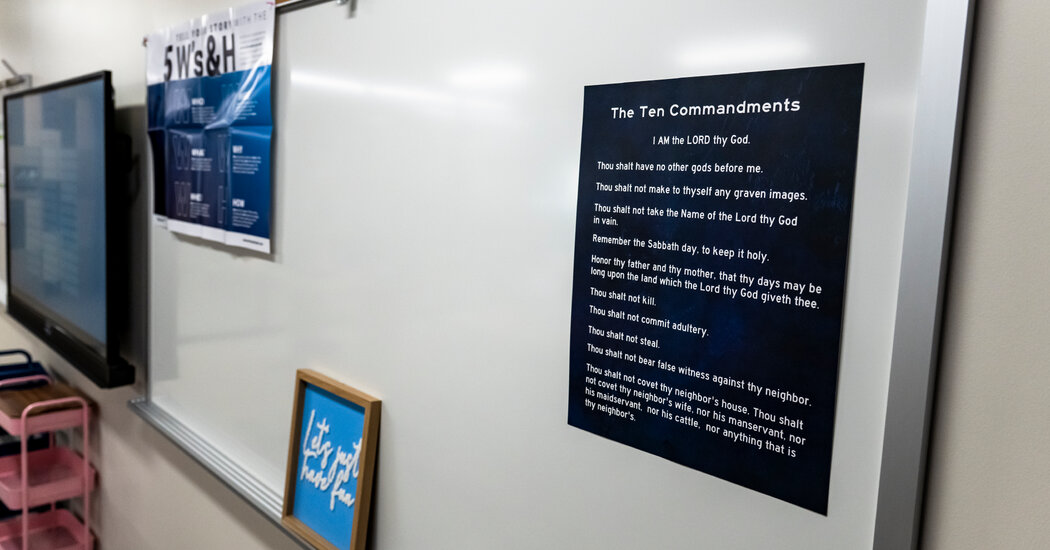
A federal judge has issued a ruling requiring several public school districts in Texas to remove displays of the Ten Commandments from their classrooms. This decision marks a significant legal development concerning the intersection of education, religion, and constitutional rights in the United States. The ruling was made by Judge Orlando L. Garcia of the U.S. District Court for the Western District of Texas, impacting 14 school districts, including those in Fort Worth, Arlington, and Conroe.
The ruling is viewed as a victory for families who argued that the displays infringed upon their religious freedoms. The controversy began earlier this year when Texas Governor Greg Abbott signed a law mandating that public schools display the Ten Commandments in a conspicuous location within each classroom. Proponents of this law argued that the Ten Commandments are foundational to understanding U.S. history and moral values.
However, Judge Garcia’s ruling underscored the impracticality of enforcing such a law without infringing on the rights of students who may feel uncomfortable or unwelcome due to the religious displays. In his ruling, he stated, “It is impracticable, if not impossible, to prevent plaintiffs from being subjected to unwelcome religious displays” while allowing school districts to enforce the law.
The Broader Legal Context
This decision is part of a broader legal landscape regarding the display of religious symbols in public schools. In June, a panel of judges from the U.S. Court of Appeals for the Fifth Circuit ruled that a similar law in Louisiana, which required the posting of the Ten Commandments, was “plainly unconstitutional.” Following this ruling, the state of Louisiana requested a rehearing on the matter, with a hearing scheduled for January 20, 2024. The Texas law is expected to be included in this hearing.
In the wake of Judge Garcia’s ruling, both the Fort Worth Independent School District and the Conroe Independent School District announced their intention to comply with the court’s order. Other districts affected by the ruling have not yet publicly commented on their plans.
Legal and Political Reactions
The Texas law stipulates that while school districts must accept donations of Ten Commandments posters, they are not obligated to use district funds to purchase them. The law has sparked considerable debate, with supporters claiming it reinforces the moral teachings that have historically guided American society. Texas Attorney General Ken Paxton has been a vocal advocate for the law, stating, “America is a Christian nation, and it is imperative that we display the very values and timeless truths that have historically guided the success of our country.” He has also initiated lawsuits against several districts that he claims have refused to display the donated posters.
On the other hand, critics argue that the law represents a clear violation of the principle of separation of church and state, a cornerstone of American constitutional law. The American Civil Liberties Union (ACLU) of Texas, which represented the plaintiffs in this case, emphasized the importance of maintaining a secular environment in public education. In August, a separate ruling from another federal judge temporarily halted the enforcement of the law while its constitutionality was being challenged. This ruling applied to 11 school districts; however, some districts proceeded to display the posters, often provided by religious organizations.
Personal Impact and Community Reaction
One of the plaintiffs in the recent case, Lenee Bien-Willner, expressed relief following the ruling, stating, “I am relieved that as a result of today’s ruling, my children, who are among a small number of Jewish children at their schools, will no longer be continually subjected to religious displays. The government has no business interfering with parental decisions about matters of faith.” This sentiment reflects a broader concern among parents and community members regarding the implications of religious displays in public schools.
The ruling not only impacts the affected school districts but also sets a precedent for future legal challenges regarding the display of religious symbols in public spaces. As the legal battles continue, the ongoing discourse surrounding education, religion, and constitutional rights in the United States remains a critical topic for lawmakers, educators, and families alike.
Historical Context
The debate over the display of religious symbols in public schools is not new. The U.S. Supreme Court has long upheld the principle of separation of church and state, particularly in educational settings. Landmark cases such as Engel v. Vitale (1962) and Abington School District v. Schempp (1963) established that school-sponsored prayer and Bible readings were unconstitutional. These rulings have set a precedent for how religious expression is treated in public schools, emphasizing the importance of maintaining a neutral environment free from religious endorsement.
The Ten Commandments, in particular, have been a focal point of legal battles across the country. While some argue that they represent moral and ethical guidelines that have influenced Western legal systems, others see their presence in public schools as a violation of the Establishment Clause of the First Amendment. This ongoing conflict reflects broader societal tensions regarding the role of religion in public life.
The Future of Religious Displays in Schools
As similar laws face scrutiny in other states, the outcomes of these legal challenges will likely influence the future of religious displays in public schools across the nation. The Texas ruling serves as a reminder of the complexities involved in balancing religious expression with constitutional rights. The implications of this decision extend beyond the immediate context of Texas and may set important legal precedents for how educational institutions navigate the intersection of faith and public education.
In summary, the federal court’s decision to order the removal of Ten Commandments displays in Texas public schools marks a pivotal moment in the ongoing debate over religious expression in educational settings. As the legal landscape evolves, stakeholders from various backgrounds will continue to engage in discussions about the role of religion in public education and the fundamental rights of students and families.
“`


