“`html
University of Texas Faces Conservative Transformation Amid New Policies
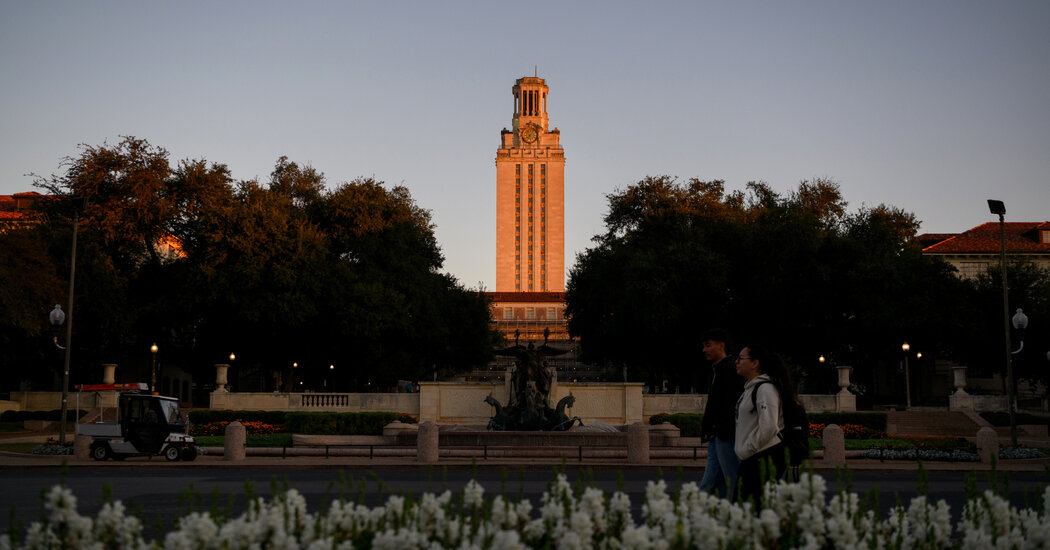
The University of Texas at Austin (UT Austin) is currently undergoing a significant transformation driven by recent conservative policies and leadership changes. This shift is part of a broader trend across Texas public universities, where state lawmakers and appointed administrators are implementing measures aimed at redefining higher education in the state. Historically, UT Austin has stood out as a bastion of liberal thought and academic freedom in a predominantly conservative state. The university has long resisted political pressures, notably defending its race-conscious admissions policy in a landmark Supreme Court case in 2016. However, the political landscape has shifted, and conservative critics of higher education are now exerting considerable influence over the institution.
Leadership Changes and Their Implications
In a notable departure from tradition, UT Austin is now led by Jim Davis, a Republican lawyer with no prior academic experience, who was appointed by state officials. This leadership change signals a broader movement to replace academic leaders with individuals who align more closely with conservative values. Davis has committed to revising the university’s curriculum, which includes an audit of gender studies courses in light of recent legislation that effectively recognizes only two genders.
Moreover, Senate Bill 37 has significantly curtailed faculty control over academic content, allowing appointed governing boards to approve academic leaders and oversee course offerings. This legislation reflects a growing trend among Texas universities to limit the teaching of topics related to race and gender. Such measures have sparked debates about academic freedom and the role of governance in shaping educational content.
New Educational Initiatives
In response to this shifting landscape, UT Austin has introduced the School of Civic Leadership, aimed at attracting conservative students. This addition is part of a broader strategy to reshape the university’s academic profile and create a more balanced ideological environment. The university has also laid off several employees following the implementation of a law that prohibits diversity and inclusion offices at public colleges, further signaling a shift in institutional priorities.
The School of Civic Leadership is designed to offer programs that promote civic engagement and conservative values, which proponents argue are essential for fostering a well-rounded education. Critics, however, argue that such initiatives may marginalize progressive perspectives and limit the diversity of thought that is crucial in higher education.
Wider Context and Similar Trends Across Texas
The changes at UT Austin are not isolated; similar transformations are occurring at other Texas universities. For instance, Texas A&M University recently faced national scrutiny after an instructor was dismissed for teaching a gender studies lesson, following a student complaint. This incident has sparked a debate over academic freedom and the extent of political influence in educational institutions.
Texas Tech University has also sought to limit discussions surrounding race and gender, implementing a new course approval process that requires higher oversight of academic content. These developments indicate a concerted effort by state officials to reshape the educational landscape to align with conservative ideologies. The implications of these changes extend beyond individual campuses, as they may set precedents for how academic institutions across the nation navigate political pressures.
Concerns Among Faculty and Students
The rapid pace of these changes has left many faculty members and students feeling anxious about the future of academic freedom at UT Austin. A recent poll conducted by the student newspaper, The Daily Texan, revealed that 40% of faculty respondents are adjusting their syllabi or teaching methods to comply with new state regulations. This has led to concerns about the ability to engage in candid discussions and explore diverse perspectives in the classroom.
Students have expressed feelings of fear and uncertainty regarding the current academic climate. For instance, Sofia Gomez, a rhetoric and writing major, shared her apprehension about the limitations on her education, stating, “If my professors are unable to teach me, and I’m not able to have candid conversations to get a proper education, what am I here for?” Such sentiments reflect a broader unease among the student body regarding the implications of the new policies.
Academic Reviews and Future Directions
In response to the shifting political landscape, UT Austin is conducting academic reviews to evaluate the relevance and rigor of its programs. University officials emphasize the importance of maintaining a balanced curriculum and welcoming a diverse range of viewpoints. However, many faculty members worry that these reviews may target departments perceived as politically controversial, particularly gender studies and others that focus on social justice.
Some faculty members have welcomed the increased scrutiny, arguing that it may foster a more balanced academic environment. Steven T. Collis, a law professor at UT Austin, noted that the current dynamics could help recalibrate the university away from a perceived ideological homogeneity. Nonetheless, the challenge remains to ensure that academic integrity is preserved while navigating the complexities of political influence.
Conclusion: The Future of Higher Education in Texas
The ongoing changes at the University of Texas at Austin epitomize a broader trend in Texas higher education, where conservative lawmakers are increasingly influencing academic policies and governance. As the political landscape continues to evolve, the implications for faculty, students, and the integrity of academic freedom remain uncertain.
The developments at UT Austin will likely serve as a critical case study for other universities grappling with similar pressures across the nation. In summary, the University of Texas at Austin’s transformation reflects a significant shift in the state’s approach to higher education, raising important questions about the future of academic freedom and the diverse perspectives that are essential to a comprehensive education.
As stakeholders in higher education navigate these changes, the dialogue surrounding academic freedom, diversity of thought, and the role of education in a democratic society will remain vital. The outcomes of these transformations will not only impact UT Austin but may also influence educational policies and practices far beyond Texas.
“`


