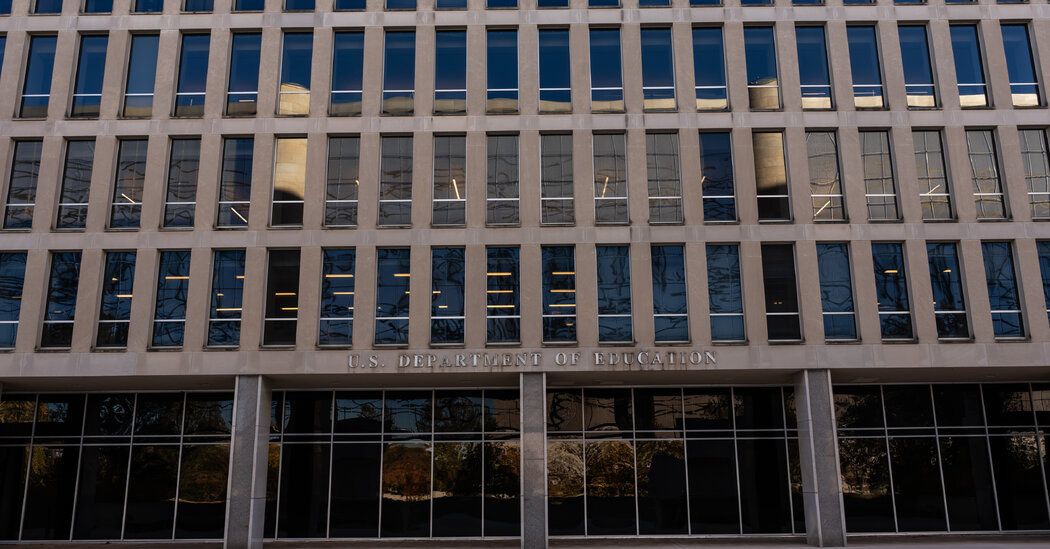
The Trump administration has announced a significant restructuring plan for the U.S. Department of Education, aiming to transfer various responsibilities to other federal agencies. This move is part of a broader initiative to diminish the role of the Education Department in overseeing educational programs at both K-12 and higher education levels.
Key responsibilities currently managed by the Office of Elementary and Secondary Education, as well as the Office of Postsecondary Education, will be reassigned primarily to the Department of Labor. This transition is intended to streamline operations and enhance the efficiency of educational funding and oversight.
Additionally, the administration plans to shift several other programs to different agencies. These include:
- A child care grant program for college students and foreign medical school accreditation, which will move to the Department of Health and Human Services.
- Fulbright programs and international education grants, which will be transferred to the State Department.
- The Indian Education Office, which will now fall under the jurisdiction of the Department of the Interior.
This restructuring aligns with President Trump’s long-stated goal of eventually closing the Education Department, a move that has faced opposition from various stakeholders, including teachers’ unions and student advocacy groups. Critics argue that dismantling the department could undermine civil rights protections and educational opportunities for students across the nation.
Education Secretary Linda McMahon emphasized that the changes are aimed at reducing bureaucratic inefficiencies and redirecting more funding directly to classrooms. She stated, “Cutting through layers of red tape in Washington is one essential piece of our final mission,” indicating a focus on refocusing educational efforts on students, families, and schools.
However, the proposal has drawn criticism from both sides of the political spectrum. Some Republicans, including Representative Brian Fitzpatrick of Pennsylvania, have expressed concerns that the core functions of the Education Department are foundational and not merely discretionary. Fitzpatrick highlighted the importance of safeguarding civil rights and ensuring equal educational opportunities for all children.
Kevin Carey, vice president for education and work at the New America Foundation, described the changes as “wasteful, wrong, and illegal,” suggesting that the reorganization could lead to inefficiencies and increased costs. Critics argue that outsourcing essential educational programs to other agencies could complicate oversight and dilute the focus on educational quality.
Becky Pringle, president of the National Education Association, criticized the timing of the announcement, which coincided with American Education Week—a period meant to celebrate public schools and educators. She accused the administration of attempting to undermine educational opportunities for students, stating, “Not only do they want to starve and steal from our students — they want to rob them of their futures.”
Despite the backlash, some Republican leaders have defended the administration’s actions. Representative Tim Walberg, chairman of the House Committee on Education and the Workforce, stated that the restructuring is part of fulfilling a promise to reform a broken education system by adjusting the size and scope of the Department of Education.
According to congressional estimates, approximately 10% of funding for local schools comes from federal sources. The Office of Elementary and Secondary Education oversees around $28 billion in grant funding, which will now be managed by the Labor Department. This office also administers numerous programs aimed at supporting low-income schools.
In the context of these changes, the administration has pointed to recent events, such as federal shutdowns, to justify the need for a streamlined approach. Officials noted that schools remained operational despite significant furloughs within the Education Department, suggesting that the absence of federal oversight did not hinder educational delivery.
Liz Huston, a White House spokeswoman, reiterated the administration’s commitment to reducing the size of the Education Department while ensuring the effective delivery of essential programs and funds. She stated, “The Democrat shutdown made one thing unmistakably clear: Students and teachers don’t need Washington bureaucrats micromanaging their classrooms.”
As part of the reorganization, the administration plans to transfer approximately $3 billion in grants from the Office of Postsecondary Education, which includes programs like TRIO, designed to assist low-income and first-generation college students, as well as students with disabilities. Concerns have been raised about how the oversight of these programs will be maintained amidst such significant changes.
Senator Susan Collins of Maine previously emphasized the importance of TRIO programs during a confirmation hearing, questioning how effective oversight could be achieved if the Department of Education is significantly reorganized or abolished. McMahon assured that there would be no intention to defund these critical programs.
Despite the administration’s efforts, there appears to be limited enthusiasm among Republicans in Congress for legislation aimed at closing the Education Department, which was established by an act of Congress in 1979. The administration’s approach has been characterized by a lack of collaboration with Congress, as it seeks to reshape the federal government’s role in education.
In summary, the Trump administration’s proposed changes to the Education Department reflect a broader strategy to reduce federal oversight in education. While the administration argues that these changes will enhance efficiency and funding allocation, significant concerns remain regarding the potential impact on civil rights protections and educational opportunities for students nationwide.


