“`html
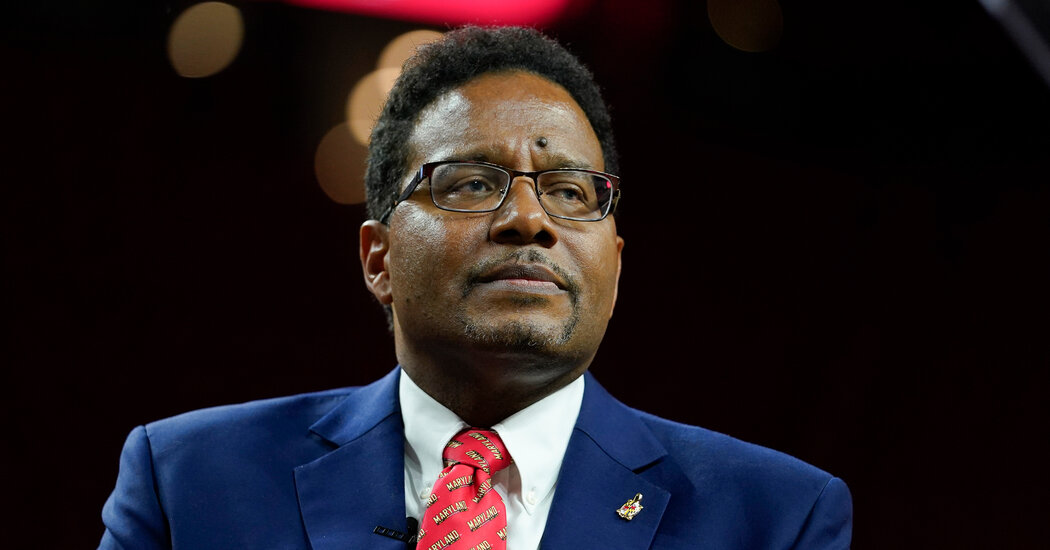
University of Maryland President Exonerated from Plagiarism Claims
The University of Maryland has announced that its president, Darryll J. Pines, has been cleared of plagiarism allegations following a comprehensive yearlong investigation. This review was initiated after claims surfaced in a conservative media outlet regarding potential misconduct in Pines’ published academic works. The investigation was conducted by the global law firm Ropes & Gray, which meticulously examined Pines’ extensive body of work, including numerous scholarly articles and contributions to the field of aerospace engineering.
The review identified two papers containing portions of text that were similar to previously published works by other authors. However, it concluded that Dr. Pines was not responsible for the inclusion of this text. Furthermore, the investigation uncovered a discrepancy concerning authorship assignments in one of the papers. Nonetheless, the review determined that Dr. Pines did not engage in any misconduct related to these issues, effectively exonerating him from the allegations.
The allegations against Dr. Pines first emerged in a report by The Daily Wire, a publication co-founded by conservative activist Ben Shapiro. Following the report, Pines proactively requested an investigation into the claims, asserting that he had not committed plagiarism. In a letter to the faculty of the University of Maryland, he acknowledged the presence of “recurrent language” in his work but maintained that the allegations were unfounded and potentially motivated by factors beyond academic scrutiny.
Context of the Allegations
This case is not isolated; it is part of a broader context in which various academics, particularly those involved in diversity initiatives, have faced scrutiny over plagiarism allegations. Notably, Claudine Gay, the former president of Harvard University, also encountered similar allegations, which contributed to her resignation. The scrutiny faced by Black academics, including Pines, raises important questions about the motivations behind such accusations and the impact they have on their careers.
Dr. Pines, who is Black, highlighted in his communication with faculty that he had been subjected to personal and professional attacks, questioning the motives behind the scrutiny he faced. This phenomenon is not new; historically, academics from underrepresented backgrounds have often found themselves under a magnifying glass, facing allegations that may be influenced by systemic biases within the academic community.
Support from the University Community
Despite the allegations, the University System of Maryland’s chancellor’s office issued a statement reaffirming its support for Dr. Pines’ leadership. The chancellor emphasized the importance of maintaining trust and integrity within the academic community, particularly in light of the pressures faced by university leaders today. In an era where social media can amplify allegations and public scrutiny, the need for thorough investigations becomes even more critical.
Dr. Pines is a graduate of the Massachusetts Institute of Technology (M.I.T.) and has an extensive academic portfolio, with over 250 published papers focusing on aerospace engineering topics, including spacecraft navigation and the development of human-powered aircraft. His contributions to the field have established him as a respected figure in academia, known for his innovative research and commitment to advancing engineering education.
Details of the Investigation
The Daily Wire’s report included excerpts from Dr. Pines’ work alongside passages from a paper published in 1996 by Joshua Altmann, a former university student in Australia. Altmann, who currently works in the oil industry in Qatar, indicated that the similarities appeared to stem from his own graduate school research. However, the context of these similarities was not explored in detail in the report, raising questions about the fairness of the portrayal of Dr. Pines’ work.
In light of the investigation’s findings, Dr. Pines has chosen not to comment further beyond the chancellor’s office statement. The university community remains focused on moving forward, emphasizing the importance of leadership and integrity in higher education. The implications of this case extend beyond the individual, touching on broader themes of academic integrity, the pressures faced by university leaders, and the ongoing debates surrounding diversity and equity in academia.
Broader Implications for Academia
As institutions navigate these complex issues, the need for transparency and fair treatment of scholars remains paramount. The exoneration of Dr. Darryll J. Pines serves as a reminder of the importance of due process in allegations of academic misconduct. The academic community must ensure that investigations into such allegations are conducted with rigor and impartiality, shielding scholars from unwarranted reputational damage.
Moreover, the scrutiny faced by academics, particularly those from marginalized backgrounds, underscores the need for a more equitable academic environment. As universities continue to grapple with issues of integrity and accountability, the outcomes of such investigations will play a crucial role in shaping the future of academic leadership and the culture of scholarship.
In conclusion, the resolution of this case highlights the importance of upholding academic standards while also recognizing the potential for bias in the scrutiny of scholars. As the University of Maryland and its president move forward, the focus will remain on fostering an environment conducive to research, innovation, and inclusive excellence.
“`


