“`html
Harvard’s FXB Center Leadership Change Amid Controversy
Harvard University’s François-Xavier Bagnoud Center for Health and Human Rights (FXB Center) is undergoing a significant leadership change. Mary T. Bassett, who has served as the director for seven years, is stepping down amidst scrutiny from various stakeholders, including government officials and academic communities. This transition raises questions about the center’s focus on human rights issues, particularly those related to Palestine, and the implications for academic freedom and institutional governance.
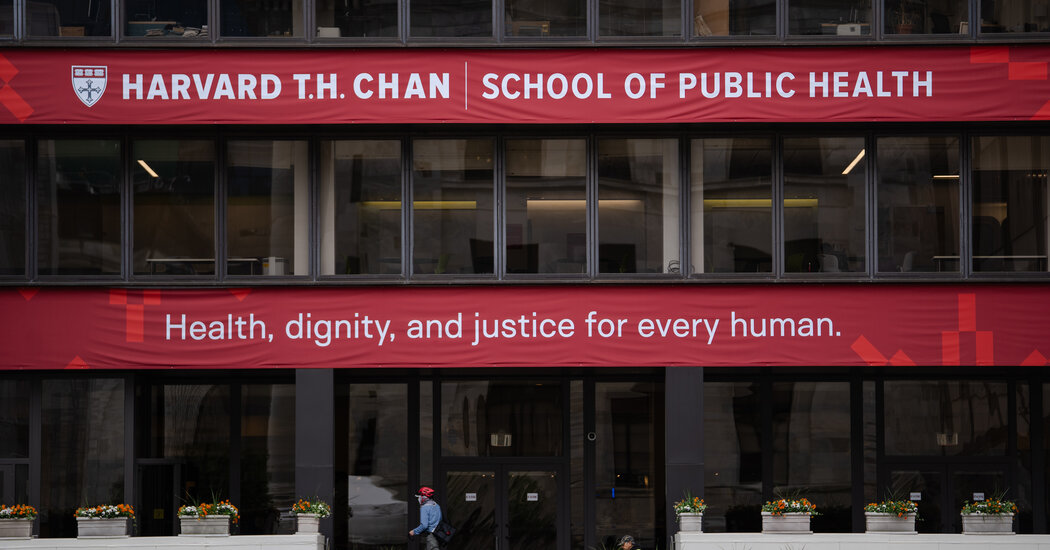
The announcement of Dr. Bassett’s departure was made by Andrea Baccarelli, dean of the T.H. Chan School of Public Health, in a communication to the university community. While Baccarelli acknowledged the substantial contributions made by Dr. Bassett during her tenure, the reasons for her departure remain unspecified, leading to speculation and concern among faculty, students, and external observers.
In recent months, the FXB Center has found itself at the center of controversy, particularly following a report by Harvard’s task force on antisemitism and anti-Israeli bias. The report criticized the center for allegedly emphasizing Palestinian perspectives in its courses and guest lectures while not adequately representing Israeli viewpoints. This scrutiny intensified following actions from the Trump administration, which targeted Harvard for its handling of antisemitism on campus, demanding an external audit of the FXB Center and other programs. Such external pressures have raised alarms about the potential influence on academic freedom and the integrity of scholarly discourse at one of the world’s leading universities.
The leadership change is part of a broader reorientation of the FXB Center’s mission. According to Baccarelli, the center will now focus more specifically on children’s health, particularly during the early developmental phases when children are most vulnerable. This strategic pivot aims to integrate a human rights perspective into the public health discourse surrounding pediatric health issues, aligning the center’s objectives with pressing public health priorities.
Kari C. Nadeau, a pediatrician and chair of the Department of Environmental Health, has been appointed as the interim director of the FXB Center. Nadeau’s extensive background in environmental health and pediatrics is expected to provide a new direction for the center as it navigates this transition. Her expertise may enhance the center’s ability to address the complex interplay between environmental factors and children’s health, a critical area of concern in contemporary public health.
The decision to replace Dr. Bassett has sparked considerable opposition within the Harvard community. A petition advocating for her reinstatement has garnered over 1,500 signatures, asserting that her removal sends a detrimental message regarding the acceptance of critical scholarship related to racial justice and Palestinian issues. Critics argue that this move reflects a troubling trend at Harvard, where external pressures may be influencing academic freedom and institutional governance.
The executive committee of Harvard’s chapter of the American Association of University Professors (AAUP) has voiced strong opposition to the leadership change, emphasizing the implications for academic freedom. They highlighted that Dr. Bassett’s removal continues a pattern of leadership changes at Harvard that have been influenced by external critics, referencing the earlier removal of leaders at the Center for Middle East Studies. Such patterns raise concerns about the potential chilling effect on scholars who wish to engage in critical discussions surrounding contentious issues.
Despite the controversy surrounding her departure, Dr. Bassett will retain her position as a professor in the Department of Social and Behavioral Sciences. This allows her to continue contributing to the academic community, albeit outside of her former leadership role at the FXB Center. Her ongoing involvement in academia may provide a platform for her to address the issues raised during her tenure and advocate for the human rights perspectives that have been central to her work.
The ongoing dialogue between Harvard officials and the Trump administration regarding allegations of antisemitism has been complex and fraught with tension. Harvard has faced demands for changes to its hiring practices, diversity initiatives, and student discipline policies as part of a broader critique from the administration. In response, Harvard has filed a lawsuit against the Trump administration, asserting its commitment to academic freedom and institutional integrity. This legal battle underscores the broader national conversation about the role of universities in addressing social justice issues while maintaining an environment conducive to free inquiry.
The FXB Center, founded in 1999, has historically focused on a wide range of human rights issues, including health disparities and social justice. Its mission has evolved over the years to address emerging public health challenges, and the new direction towards children’s health represents a strategic pivot that aligns with current public health priorities while still maintaining a human rights framework. This evolution reflects a growing recognition of the importance of early childhood health in achieving broader health equity goals.
As the FXB Center embarks on this new chapter, it will be essential to monitor how this shift impacts its academic offerings and community engagement. The center’s ability to balance its mission with the expectations of various stakeholders, including students, faculty, and external critics, will be critical in navigating the challenges ahead. The ongoing discourse surrounding the center’s focus on human rights and its implications for public health will likely shape its future trajectory.
In summary, the leadership change at Harvard’s FXB Center highlights the intersection of academic freedom, human rights advocacy, and external political pressures. As the center refocuses its mission, it will need to address the concerns raised by its community while continuing to advocate for vulnerable populations, particularly children, in the public health arena. The evolving landscape of public health and human rights will undoubtedly influence the center’s initiatives and its role within the broader academic and social context.
“`


